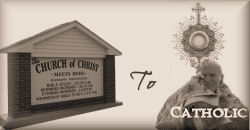
So I consider myself to be a pretty reasonable person. I try my best to be respectful to people of all faiths (or non-faiths) and I try to play by their rules when I'm on their turf. It's frustrating, though, when they don't even play by their own rules, and then get upset when I ask them to. It's especially upsetting when I feel duped, when I've been told I'm welcome as an equal and actually believed it, only to be scoffed at.
On a recent thread on the ex-CoC board entitled "The Pagan Roots of Christianity" I, against my better judgement, attempted to light-heartedly point out that, since the skeptics' rules are that nothing should be accepted without hard proof, perhaps it would be prudent not to start with the assumption that Christianity DOES have its roots in pagan beliefs. I wouldn't have had a problem with a thread merely discussing the similarities between pagan beliefs and Christianity, and entitled as such. There's just that old post hoc ergo propter hoc fallacy thing, after all, that's easy to make, that I thought skeptics, being skeptics, and constantly claiming to hold up reason and logic as the highest goal, would appreciate the sentiment. But apparently, I wasn't aware of the rule that one need not be skeptical or logical if the claim is something attempting to discredit Christianity. Now I know better.
I find it interesting and rather telling that asking the skeptics to play by their own supposed rules of logic simply got more long diatribes about how Christians aren't logical or rational, and so they just don't get it. Out comes the usual comments about Christians relying on "faith" (which I imagine being said with a tinge of contempt, or at least pity), while skeptics (cue the spotlight and triumphant music) rely purely on reason and logic.
Just don't try to point it out when they don't.
I decided to add the ex-CoC board to my list of Lenten sacrifices. It wasn't this incident that prompted me to do so, it was a combination of recent ugliness in general. I normally go there in order to lend and receive support, and to stretch my brain a bit, consider other viewpoints, practice my reasoning skills, etc. All these things are good for me when a basic level of mutual respect exists, but when that isn't there, it becomes harmful and toxic. Recently I've felt the mutual respect wane, and especially at this time of year, I don't want to risk being disrespectul back. So I felt it was best to remove myself from the atmosphere for a bit, and focus on renewing my faith and life in Christ. After all, that's what Lent is all about!
Showing posts with label Reason. Show all posts
Showing posts with label Reason. Show all posts
Thursday, March 01, 2007

Monday, February 26, 2007
Motives of Credibility
A recent post on Jimmy Akin's blog mentioned the term "motive of credibility" while answering a reader's question about how and when we stop relying on reason alone and make that necessary leap of faith. He explained it as such:
What people who are questioning what they're being told by others need is a reason to believe them, or what is sometimes called a "motive of credibility." The more motives of credibility they can establish regarding the truthfulness of what they are being told, the more reason they have to accept it.
For example, if a person who was blind from birth wants to know why he should believe, on the word of someone else, that grass is green and that the sky is blue, he is asking--in essence--for a motive of credibility. He can't perceive these things for himself, but he's seeking a reason that make the claims credible.
The logical one to offer in that case would be the testimony of others. The sighted person who has just told him that grass is green and that the sky is blue might say, "Don't just take my word for it. Ask other people! They'll tell you the same thing."
While a person blind from birth could never completely rule out the possibility of a society-wide conspiracy of Santa Claus-like scale to deceive blind people about the colors of objects (or even the existence of color itself), each person he talk to who confirms that grass is green and that the sky is blue provides him one more motive of credibility to accept these facts, and at some point the volume of the motives becomes such that (if he is rational), he'll end up saying, "Okay, I can't see these colors for myself, but it's reasonable for me to believe both that color exists and that grass is green and the sky is blue."
I like this term, and the concept is one I've touched on before here when talking about evidence vs. proof, and it's also an important concept in the excellent book, The Science Before Science. When in the realm of things that are simply not provable, it is the motives of credibility that help us to still have reasonable faith that something is true. It is relying on motives of credibility, examining what one faith system says and comparing it to reality as we know it, that helps us acknowledge truth, and helps us to consider one source more reliable than another. (This is how I came to accept Catholicism, at first I checked out every last claim...after finding claim after claim that rang true once I considered it, I started to trust that the Church has the wisdom she claims.)
And that is the difference between having a reasonable faith in something, and just arbitrarily deciding to believe that the latest guru on TV is correct that it is fairies who make the earth go round. This is what atheists and agnostics miss when they compare believing in God to believing in the tooth fairy, in fact most of them would probably say that reasonable faith is quite the oxymoron. But it is they who are being unreasonable in not acknowledging the fact that we all rely on motives of credibility and probabilities of truth every day and for important and vital information, and there is nothing irrational about doing so.
What people who are questioning what they're being told by others need is a reason to believe them, or what is sometimes called a "motive of credibility." The more motives of credibility they can establish regarding the truthfulness of what they are being told, the more reason they have to accept it.
For example, if a person who was blind from birth wants to know why he should believe, on the word of someone else, that grass is green and that the sky is blue, he is asking--in essence--for a motive of credibility. He can't perceive these things for himself, but he's seeking a reason that make the claims credible.
The logical one to offer in that case would be the testimony of others. The sighted person who has just told him that grass is green and that the sky is blue might say, "Don't just take my word for it. Ask other people! They'll tell you the same thing."
While a person blind from birth could never completely rule out the possibility of a society-wide conspiracy of Santa Claus-like scale to deceive blind people about the colors of objects (or even the existence of color itself), each person he talk to who confirms that grass is green and that the sky is blue provides him one more motive of credibility to accept these facts, and at some point the volume of the motives becomes such that (if he is rational), he'll end up saying, "Okay, I can't see these colors for myself, but it's reasonable for me to believe both that color exists and that grass is green and the sky is blue."
I like this term, and the concept is one I've touched on before here when talking about evidence vs. proof, and it's also an important concept in the excellent book, The Science Before Science. When in the realm of things that are simply not provable, it is the motives of credibility that help us to still have reasonable faith that something is true. It is relying on motives of credibility, examining what one faith system says and comparing it to reality as we know it, that helps us acknowledge truth, and helps us to consider one source more reliable than another. (This is how I came to accept Catholicism, at first I checked out every last claim...after finding claim after claim that rang true once I considered it, I started to trust that the Church has the wisdom she claims.)
And that is the difference between having a reasonable faith in something, and just arbitrarily deciding to believe that the latest guru on TV is correct that it is fairies who make the earth go round. This is what atheists and agnostics miss when they compare believing in God to believing in the tooth fairy, in fact most of them would probably say that reasonable faith is quite the oxymoron. But it is they who are being unreasonable in not acknowledging the fact that we all rely on motives of credibility and probabilities of truth every day and for important and vital information, and there is nothing irrational about doing so.
Sunday, January 14, 2007
Believe That You May Understand...
The past week or so, I've been engaged in a discussion with some fellow ex-ers who ended up losing faith in God. I have to admit that I have a hard time understanding what it's like not to have faith in God, because for some reason, despite my turbulent conversion, that never happened to me. That was the one thing that I clung to when I was confused and scared...my faith in God. It honestly never crossed my mind to doubt His existence. And so, sometimes it's hard for me to discuss with those who have lost faith, because I want to understand them and to be able to communicate with them effectively, but I think there are obstacles to effective communication on both sides.
On my side, it's because, as I mentioned, I can't really grasp what it's like not to believe in God, and I have a hard time relating to their disbelief, which in turn makes it hard for me to explain my own belief in a way they can understand or relate to. On their side, depending on who I'm discussing with, the fact that I never seriously doubted God's existence may cause them to consider anything I say to be tainted with ignorance or naïveté. (I have to say that I am very fortunate to know some very respectful atheists and agnostics who, even if they might think this about me, refrain from using it as an excuse or an attack, and at least seem to thoughtfully consider my remarks.) Obviously, I can't do anything about the latter obstacle, but I can at least try to understand where they are coming from a bit better. So, I decided to read what some former atheists have to say on the matter!
This led me to a couple blogs, namely Et-tu, Jen? and Chez Joel. After spending way too much time devouring the contents of blog posts related to atheism and God's existence and proving His existence (or not), I think I finally started to discover better ways to describe the differences between evidence and proof, what it is to have faith, to believe, and why such things are even necessary when discussing with my atheist friends. (At least, things are a little less muddled in my own head now, even if I haven't necessarily helped them!)
Evidence vs. Proof
I was first trying to find a way to explain the difference between evidence and proof. I hear a lot about wanting "proof" of something, but when I say that there will never be proof, I often get responses like, "Well then why shouldn't I believe that fairies are what make the world go round?" or the like. But when I say there won't be proof, I'm not saying there won't be evidence. It's just that, because of the nature (or "super" nature) of God, we can't always demand natural evidence, or scientific evidence, we need to be open to considering supernatural or anecdotal evidence. If someone rules out this kind of evidence to begin with, they're closing the case before giving it a chance. One of the blog posts that helped me on this point was from Jennifer's blog on proof.
Atheists often accuse the religious of having different (specifically subpar) standards for evidence when it comes to belief in God. It seems to me, though, that it is the atheists who hold religion and the existence of God to an impossibly high standard, compared to many other things in everyday life, and then complain (or rejoice, depending) when the evidence fails to meet their standards. And yet these standards are not used on other equally unprovable things in life, such as love. Just as we can't prove scientifically the existence of love, we can't prove scientifically the existence of God. Yet because of evidence I have seen in my life, I believe both exist, and I simply don't find this unreasonable or irrational.
Belief
During the course of our discussion, the proposition was made that belief is a choice. Of course, again, the agnostics/atheists of the group say, "Well I'm sorry, but I can't choose to believe in God anymore than I can choose to believe that fairies make the world go round." It seemed to me that they often equate belief or faith with feelings...and this got me thinking about love.
Just as atheists say "I can't make myself believe," many people today say, "I can't make myself love." But what they mean by this is they can't conjure up fuzzy warm feelings. But I believe that real love is a choice...if it weren't, there's no way we could promise to love our spouse for the rest of our lives in our wedding vows. (In fact, I propose that this widespread understanding of love as merely an uncontrollable feeling is partly responsible for the current divorce rate.)
Then I started to wonder, what is belief anyway? If it's not just a feeling, what is it? I found a wonderful answer in a post called How to Find God in Three Arduous Steps on Chez Joel. He said:
To believe is not to change your mind, or your feelings. It's no good to trick yourself into thinking differently. To believe is simply to act on the assumption that something is true.
This!! THIS is what I had been looking for!
The quote from St. Augustine immediately jumped to mind, "Seek not to understand that you may believe, but believe that you may understand."
I know the atheist doesn't like to hear this, and often sees it as a cop out, or as a form of brainwashing, or something along those lines. But if we look at this quote as it applies to love, I think it holds true there as well. If we tweak the quote a bit, and change just one word, we can say, "Seek not to understand that you may love, but love that you may understand."
Do we expect people who have never experienced love to understand it? I mean, it often defies explanation...how can people be self sacrificing and self giving? Why would they do such things, what are they getting out of it? It doesn't really make sense, no one can study love enough to understand it, you have to believe in love, to act on the assumption that it is true, to experience it, before you really understand it. But I don't see people demanding "proof" that love exists before acting as if it does the way they demand proof that God exists, and yet it's not considered unreasonable to make that leap when it comes to love, presumably because most of us experience it from a very early age.
Miracles
Another commonly mentioned argument is the "God, I would believe in you if..." argument. (Once again, Jen's blog was extremely helpful!)There are some very good points made about how even a miracle wouldn't be proof enough, because doubts arise, and eventually we would just want more proof. Certainly God could hand deliver miracles on demand if He wanted, so the fact that He doesn't should push us to consider the possibility that there must be a reason. What does God get out of wanting us to make a leap of faith? What do we get out of having to make that leap of faith? Perhaps taking our example of love, once again, can help us understand.
So many people say, "I would only believe if I could just have one miracle," but what if we asked a potential spouse before we agreed to marriage, "I will believe your love for me exists, and act as if it's true, only if you prove it to me first." This would be virtually impossible, there would be no way to definitively prove such a thing. Part of the beauty of marriage vows is the mutual vulnerability, because this turns into a strength as trust is built and love grows, but the vulnerability must come first. As scary as it is, it is this vulnerability, this surrender that God wants to be able to help us grow...this humility, this is the fertile soil needed to be able to plant that seed of faith. It's only when we recognize our inability to do it ourselves, when we acknowledge the intellect alone isn't enough, it's only when we submit, when we ask God for the faith we need to believe that we can even begin to understand. We simply can't do it on our own, and if we expect or demand to understand before we believe, we'll only end up disappointed.
On my side, it's because, as I mentioned, I can't really grasp what it's like not to believe in God, and I have a hard time relating to their disbelief, which in turn makes it hard for me to explain my own belief in a way they can understand or relate to. On their side, depending on who I'm discussing with, the fact that I never seriously doubted God's existence may cause them to consider anything I say to be tainted with ignorance or naïveté. (I have to say that I am very fortunate to know some very respectful atheists and agnostics who, even if they might think this about me, refrain from using it as an excuse or an attack, and at least seem to thoughtfully consider my remarks.) Obviously, I can't do anything about the latter obstacle, but I can at least try to understand where they are coming from a bit better. So, I decided to read what some former atheists have to say on the matter!
This led me to a couple blogs, namely Et-tu, Jen? and Chez Joel. After spending way too much time devouring the contents of blog posts related to atheism and God's existence and proving His existence (or not), I think I finally started to discover better ways to describe the differences between evidence and proof, what it is to have faith, to believe, and why such things are even necessary when discussing with my atheist friends. (At least, things are a little less muddled in my own head now, even if I haven't necessarily helped them!)
Evidence vs. Proof
I was first trying to find a way to explain the difference between evidence and proof. I hear a lot about wanting "proof" of something, but when I say that there will never be proof, I often get responses like, "Well then why shouldn't I believe that fairies are what make the world go round?" or the like. But when I say there won't be proof, I'm not saying there won't be evidence. It's just that, because of the nature (or "super" nature) of God, we can't always demand natural evidence, or scientific evidence, we need to be open to considering supernatural or anecdotal evidence. If someone rules out this kind of evidence to begin with, they're closing the case before giving it a chance. One of the blog posts that helped me on this point was from Jennifer's blog on proof.
Atheists often accuse the religious of having different (specifically subpar) standards for evidence when it comes to belief in God. It seems to me, though, that it is the atheists who hold religion and the existence of God to an impossibly high standard, compared to many other things in everyday life, and then complain (or rejoice, depending) when the evidence fails to meet their standards. And yet these standards are not used on other equally unprovable things in life, such as love. Just as we can't prove scientifically the existence of love, we can't prove scientifically the existence of God. Yet because of evidence I have seen in my life, I believe both exist, and I simply don't find this unreasonable or irrational.
Belief
During the course of our discussion, the proposition was made that belief is a choice. Of course, again, the agnostics/atheists of the group say, "Well I'm sorry, but I can't choose to believe in God anymore than I can choose to believe that fairies make the world go round." It seemed to me that they often equate belief or faith with feelings...and this got me thinking about love.
Just as atheists say "I can't make myself believe," many people today say, "I can't make myself love." But what they mean by this is they can't conjure up fuzzy warm feelings. But I believe that real love is a choice...if it weren't, there's no way we could promise to love our spouse for the rest of our lives in our wedding vows. (In fact, I propose that this widespread understanding of love as merely an uncontrollable feeling is partly responsible for the current divorce rate.)
Then I started to wonder, what is belief anyway? If it's not just a feeling, what is it? I found a wonderful answer in a post called How to Find God in Three Arduous Steps on Chez Joel. He said:
To believe is not to change your mind, or your feelings. It's no good to trick yourself into thinking differently. To believe is simply to act on the assumption that something is true.
This!! THIS is what I had been looking for!
The quote from St. Augustine immediately jumped to mind, "Seek not to understand that you may believe, but believe that you may understand."
I know the atheist doesn't like to hear this, and often sees it as a cop out, or as a form of brainwashing, or something along those lines. But if we look at this quote as it applies to love, I think it holds true there as well. If we tweak the quote a bit, and change just one word, we can say, "Seek not to understand that you may love, but love that you may understand."
Do we expect people who have never experienced love to understand it? I mean, it often defies explanation...how can people be self sacrificing and self giving? Why would they do such things, what are they getting out of it? It doesn't really make sense, no one can study love enough to understand it, you have to believe in love, to act on the assumption that it is true, to experience it, before you really understand it. But I don't see people demanding "proof" that love exists before acting as if it does the way they demand proof that God exists, and yet it's not considered unreasonable to make that leap when it comes to love, presumably because most of us experience it from a very early age.
Miracles
Another commonly mentioned argument is the "God, I would believe in you if..." argument. (Once again, Jen's blog was extremely helpful!)There are some very good points made about how even a miracle wouldn't be proof enough, because doubts arise, and eventually we would just want more proof. Certainly God could hand deliver miracles on demand if He wanted, so the fact that He doesn't should push us to consider the possibility that there must be a reason. What does God get out of wanting us to make a leap of faith? What do we get out of having to make that leap of faith? Perhaps taking our example of love, once again, can help us understand.
So many people say, "I would only believe if I could just have one miracle," but what if we asked a potential spouse before we agreed to marriage, "I will believe your love for me exists, and act as if it's true, only if you prove it to me first." This would be virtually impossible, there would be no way to definitively prove such a thing. Part of the beauty of marriage vows is the mutual vulnerability, because this turns into a strength as trust is built and love grows, but the vulnerability must come first. As scary as it is, it is this vulnerability, this surrender that God wants to be able to help us grow...this humility, this is the fertile soil needed to be able to plant that seed of faith. It's only when we recognize our inability to do it ourselves, when we acknowledge the intellect alone isn't enough, it's only when we submit, when we ask God for the faith we need to believe that we can even begin to understand. We simply can't do it on our own, and if we expect or demand to understand before we believe, we'll only end up disappointed.
Monday, December 18, 2006
Faith and Doubt
This post will probably be most understood by readers who have an affiliation with the CoC, because faith is something that is extremely understressed there. Understanding what faith itself is was a big step for me, because in the CoC we do not rely much on faith. We try to prove everything, and we really deep down believe that everything can be shown from the Bible, and so there's no need for faith because it can all be argued and explained rationally (so they say).
Often, what happens when someone from the CoC decides to leave, is that since all their faith was really in the "scriptural evidence" rather than God, when that scriptural evidence falls to pieces, their faith falls to pieces. (It goes without saying that there are always exceptions, this is just a general observation.) There are others, though, who are fortunate to somehow hold onto that thread of faith in God, and have to sort out where to go from there.
True faith is a God-given gift. It is one of the three theological virtues (faith, hope, love) which we cannot fabricate of our own accord, they must be given to us by God. And so, our reason takes us to a point, we see the reasonable arguments for the Church, but there comes a time when we must finally rest on faith, especially if there are lingering doubts. This is a hard thing to do for ex-CoCers! It is so pounded into us that any doubt is BAD BAD BAD that we're afraid of joining up anywhere unless we're absolutely 100% sure. If there are any doubts at all, it feels like we're in limbo, not able to go back but not able to move forward either.
What is important to realize is the distinction between voluntary doubt and involuntary doubt. Here's something from Catholic answers on that:
Obstinate doubt is a person’s refusal to give assent to something and persistance in this refusal through his own fault. It is important to distinguish this willful refusal to assent from merely having hesitancy or conflicted feelings about something that one accepts.
Doubt is distinguished as either voluntary or involuntary. The Catechism explains:
Voluntary doubt about the faith disregards or refuses to hold as true what God has revealed and the Church proposes for belief. Involuntary doubt refers to hesitation in believing, difficulty in overcoming objections connected with the faith, or also anxiety aroused by its obscurity. If deliberately cultivated, doubt can lead to spiritual blindness (CCC 2088).
Involuntary doubt is not sinful and may be experienced by any sincere believer. Voluntary doubt, on the other hand, is grave issue.
When doubts arise, we must rely on faith. Now, that statement kind of sounds obvious, but think about this...if we are expecting to understand everything and rid ourselves of all lingering doubts before we do anything, would we really have faith then? Or would we just be counting on our intelligence and reason alone to get us through? This kind of outlook could result in a very weak faith ultimately, so that if someone who converted in this way one day came across a teaching that they couldn't understand intellectually, it might cause a loss of whatever little faith they had to begin with, because they haven't been really relying on faith, just as those who relied so heavily on scriptural evidence can see their faith in God dashed as the evidence for their scriptural interpretation is dashed.
All this to say, the fact that we may have lingering doubts about some things the Church teaches is absolutely normal, and in fact is good practice for relying on faith! Remember that faith is not something that comes from us, it comes from God, and so we need to be sure to pray for faith. God knows we need it, be He also wants to see that we acknowledge that we need it, and that we know we can only receive it from Him.
A few months ago at mass, a reading from Luke was read, and my husband made a comment about different ways it could be read. Read this passage, and think of the blind man, not as physically blind, but as spiritually blind, as not being able to see the truth clearly, but wanting to.
And it came to pass, that as he was come nigh unto Jericho, a certain blind man sat by the way side begging:
And hearing the multitude pass by, he asked what it meant. And they told him, that Jesus of Nazareth passeth by. And he cried, saying, Jesus, thou son of David, have mercy on me. And they which went before rebuked him, that he should hold his peace: but he cried so much the more, Thou son of David, have mercy on me.
And Jesus stood, and commanded him to be brought unto him: and when he was come near, he asked him, Saying, What wilt thou that I shall do unto thee? And he said, Lord, that I may receive my sight. And Jesus said unto him, Receive thy sight: thy faith hath saved thee.
And immediately he received his sight, and followed him, glorifying God: and all the people, when they saw it, gave praise unto God.
Gives a whole new meaning to it doesn't it? For those struggling with doubt, remember this prayer, and say it often. "Lord, I believe, help my unbelief." Ask for faith, and you will receive.
Often, what happens when someone from the CoC decides to leave, is that since all their faith was really in the "scriptural evidence" rather than God, when that scriptural evidence falls to pieces, their faith falls to pieces. (It goes without saying that there are always exceptions, this is just a general observation.) There are others, though, who are fortunate to somehow hold onto that thread of faith in God, and have to sort out where to go from there.
True faith is a God-given gift. It is one of the three theological virtues (faith, hope, love) which we cannot fabricate of our own accord, they must be given to us by God. And so, our reason takes us to a point, we see the reasonable arguments for the Church, but there comes a time when we must finally rest on faith, especially if there are lingering doubts. This is a hard thing to do for ex-CoCers! It is so pounded into us that any doubt is BAD BAD BAD that we're afraid of joining up anywhere unless we're absolutely 100% sure. If there are any doubts at all, it feels like we're in limbo, not able to go back but not able to move forward either.
What is important to realize is the distinction between voluntary doubt and involuntary doubt. Here's something from Catholic answers on that:
Obstinate doubt is a person’s refusal to give assent to something and persistance in this refusal through his own fault. It is important to distinguish this willful refusal to assent from merely having hesitancy or conflicted feelings about something that one accepts.
Doubt is distinguished as either voluntary or involuntary. The Catechism explains:
Voluntary doubt about the faith disregards or refuses to hold as true what God has revealed and the Church proposes for belief. Involuntary doubt refers to hesitation in believing, difficulty in overcoming objections connected with the faith, or also anxiety aroused by its obscurity. If deliberately cultivated, doubt can lead to spiritual blindness (CCC 2088).
Involuntary doubt is not sinful and may be experienced by any sincere believer. Voluntary doubt, on the other hand, is grave issue.
When doubts arise, we must rely on faith. Now, that statement kind of sounds obvious, but think about this...if we are expecting to understand everything and rid ourselves of all lingering doubts before we do anything, would we really have faith then? Or would we just be counting on our intelligence and reason alone to get us through? This kind of outlook could result in a very weak faith ultimately, so that if someone who converted in this way one day came across a teaching that they couldn't understand intellectually, it might cause a loss of whatever little faith they had to begin with, because they haven't been really relying on faith, just as those who relied so heavily on scriptural evidence can see their faith in God dashed as the evidence for their scriptural interpretation is dashed.
All this to say, the fact that we may have lingering doubts about some things the Church teaches is absolutely normal, and in fact is good practice for relying on faith! Remember that faith is not something that comes from us, it comes from God, and so we need to be sure to pray for faith. God knows we need it, be He also wants to see that we acknowledge that we need it, and that we know we can only receive it from Him.
A few months ago at mass, a reading from Luke was read, and my husband made a comment about different ways it could be read. Read this passage, and think of the blind man, not as physically blind, but as spiritually blind, as not being able to see the truth clearly, but wanting to.
And it came to pass, that as he was come nigh unto Jericho, a certain blind man sat by the way side begging:
And hearing the multitude pass by, he asked what it meant. And they told him, that Jesus of Nazareth passeth by. And he cried, saying, Jesus, thou son of David, have mercy on me. And they which went before rebuked him, that he should hold his peace: but he cried so much the more, Thou son of David, have mercy on me.
And Jesus stood, and commanded him to be brought unto him: and when he was come near, he asked him, Saying, What wilt thou that I shall do unto thee? And he said, Lord, that I may receive my sight. And Jesus said unto him, Receive thy sight: thy faith hath saved thee.
And immediately he received his sight, and followed him, glorifying God: and all the people, when they saw it, gave praise unto God.
Gives a whole new meaning to it doesn't it? For those struggling with doubt, remember this prayer, and say it often. "Lord, I believe, help my unbelief." Ask for faith, and you will receive.
Monday, November 20, 2006
The Science Before Science: A Guide to Thinking in the 21st Century
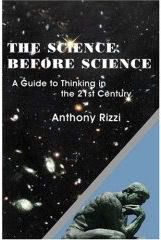 I have finally finished reading this amazing book. I initially bought it for my husband, because he asked for it. After he read it, he said I needed to read it, and even though I wasn't very interested in it, I took his advice and I did. Now, I'm not much of a science person, I'm much more interested in the arts, which is why I wasn't attracted to reading it initially. But don't let the title of this book fool you...it is about philosophy, and how to use it and apply it in our modern age. Anthony Rizzi describes the problems of much modern thought, which refuses to put "first things first," that is, much of modern thought puts the empiriological as the final goal, and ignores the ontological in the process. He reminds us that, "In all of this, we must remember that being is primary. Knowledge is about reality, not about knowledge." Without proper philosophy to connect the findings of empiriological science back to reality, we end up making absurd conclusions. One such example Rizzi gives is "the nothingness of atoms."
"...if we reduce everything to the arrangement of inert atoms and say atoms are mostly empty space, then we must conclude that we are mostly nothing. As we saw in Chapter 2, there are severe problems with this line of argument. The most manifest problem with the argument is that it implicitly assumes that we know atoms before we know ourselves. This is clearly not true. As we've emphasized, in trying to understand things, we must start with what is more known and proceed to what is less known. However, it is an occupational hazard of physicists, chemists, and scientists and engineers of all types to think of atoms as known first, for in their work, they often think in terms of atoms and not at all about those things that allow them to access and deduce the existence of atoms. These things include the scientists themselves, many other macroscopic things, as well as many significant ideas passed on to them by others.
We see many examples of scientists and philosophers who claim we cannot know that we exist, who claim we cannot trust our senses...and yet, they are happy to accept scientific studies of the physical world, which were done using those very senses they claim we can't trust. In the above example, we see how absurd it is to say that because atoms are composed of mostly nothing, we, therefore, must be mostly nothing...but this conclusion is a very plausible one to make when one doesn't take into consideration the ontological. Rizzi does an excellent job of pointing out such logical fallacies among modern thought, especially when talking about moral relativism, ethics within science, etc.
This is not exactly an easy read, it took me several months to get through it because it is so incredibly dense, I often had to take breaks just to grasp an idea before reading on. However, I highly recommend this book to anyone who is interested in science, in philosophy, in religion, or to anyone who is interested in human thought and learning. This book helps to make clear the purpose of all sciences, to find truth, to conform our minds with reality. To do this, we must first believe that there is a reality that exists, and this is not something that can be tested in a lab, it belongs in the realm of philosophy. An interesting point made in the book is that we all use philosophy, whether we know it or not, but when we do it without proper formation, it's easy to come to mistaken conclusions...even highly educated scientists can go astray because they are lacking proper knowledge of the science that must come before science, philosophy.
Now go out and buy this book!
Subscribe to:
Posts (Atom)